
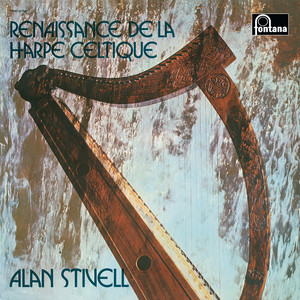
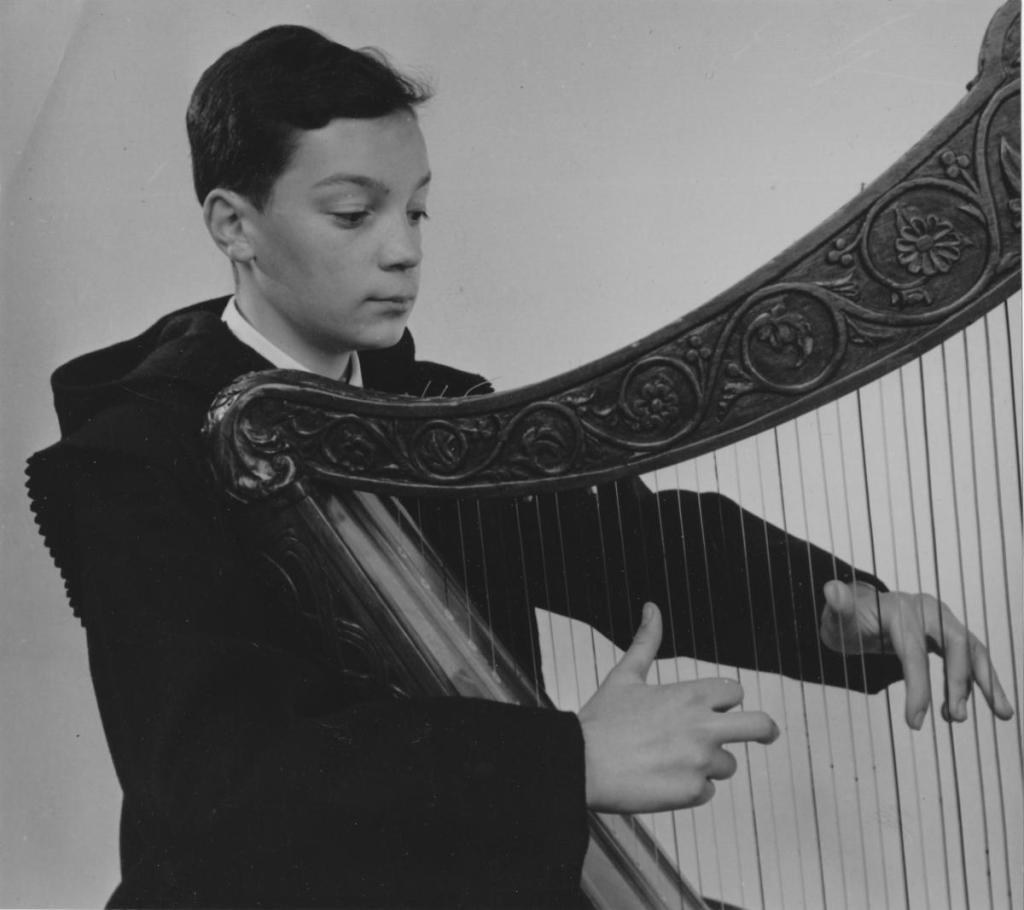
Our contemporary ideas of what makes a person “Celtic” are often built on misconception. Most associate the Celts with the Irish or Scottish, and while they would certainly fall within the category, we ought not to treat these ethnicities as one and the same with the umbrella stratification. The Celtic peoples were at one point a very large group encompassing much of mainland Europe; remnants of such can be found in Northwest France with an ethno-linguistic group known as the Bretons. It’s important that we recognize the cultural heritage of the Bretons, as they have faced much discrimination from the French government, not too dissimilar to how other Celtic groups were treated by their neighboring states. So as an aspiring Celtic goddess and a daughter of the Irish diaspora, I feel it necessary to shed some light onto a neglected and overlooked group in the Celtic family. In my jubilation to search for Celtic music, I have discovered Renaissance de la harpe celtique by Alan Stivell.
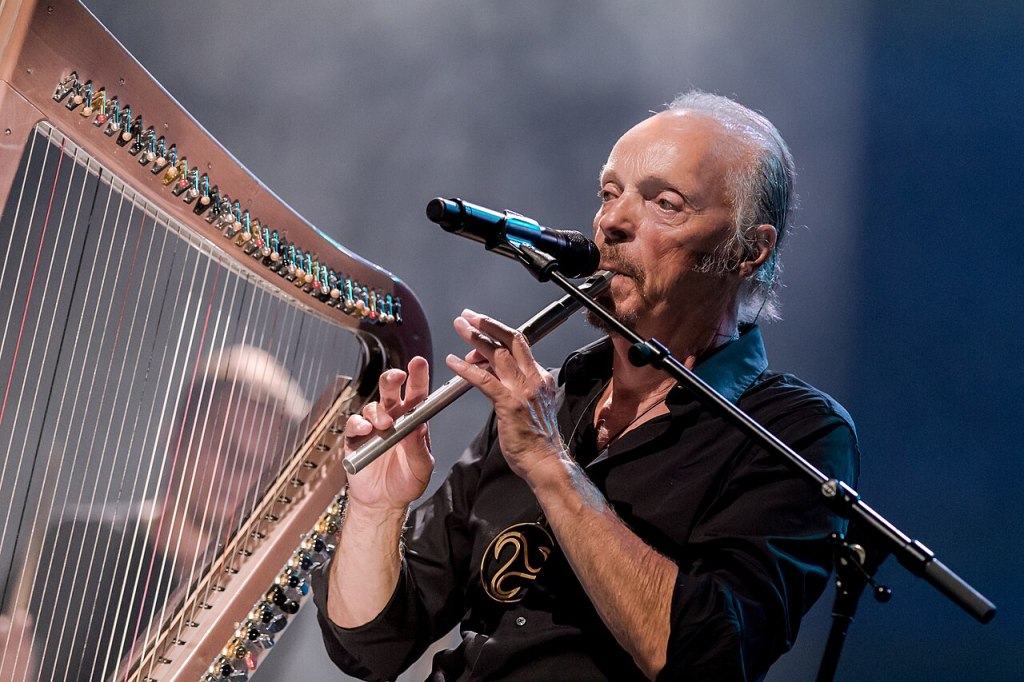
If one word could be used to describe Stivell’s music, I would characterize it as lush. Unfortunately, Shaelan would rather I write a thousand words and not just one, so I will have to come up with a few others. Lush is actually quite an apt representation for the music on this record; a lot of the album is recorded just with a Celtic harp, and with that in mind, Stivell really does achieve a lot with what little he might work with. The album isn’t completely capitulated to the overwhelming dominance of the harp; there are other instruments in the mix, but they come up rather sparingly and never take away too much of the harp’s spotlight. The album does also make use of a string section, Irish flute, bagpipes, Breton bombarde, acoustic and bass guitars, as well as some percussion. In all they come up so infrequently that after repeat listens you almost forget they’re going to come up again in the album, and you get a nice surprise when you hear them in a song when you weren’t anticipating them, kind of like how I still find leftover Starbursts in the seat cushion of my car after last Easter when my niece couldn’t figure out that the Easter bunny left candy for her in my vehicle. Despite the album being so reliant on the harp, the album never feels like it’s missing an integral piece. It remains as beautiful to its last notes played, and the brief moments of silence do add a lot to its spare beauty.
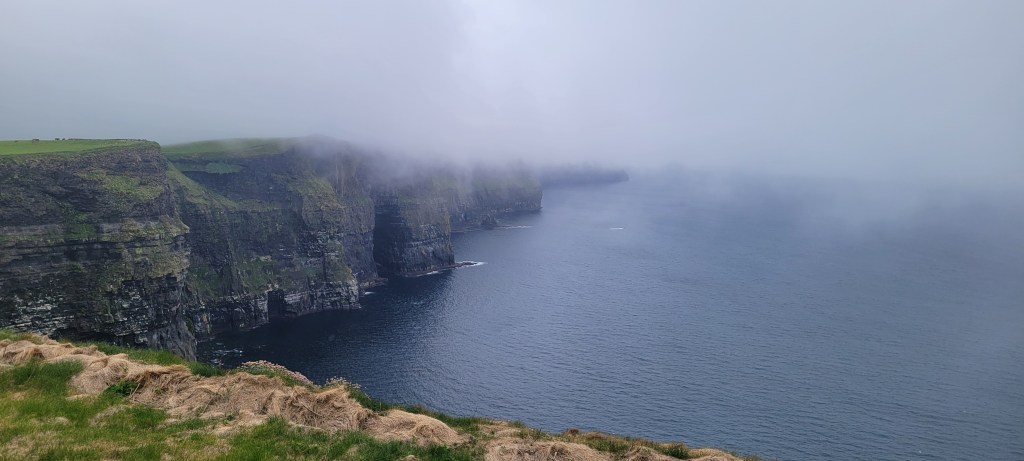
I visited the Emerald Isle in the late spring of 2025, and while the music was recorded with traditions of the Bretons in mind, I can’t help but feel that the album set the exact atmosphere for Éire. “Ys” matched so perfectly the feeling of being on the island’s western coast, its sheer rocky cliffs that jut out into the North Atlantic Ocean, with the breeze flowing through your hair, whipping it around in every direction imaginable due to change at any moment from its fickle whims. The harp arpeggios and phrases set against field recordings of the ocean tide are an outstanding backdrop for gazing at those angular and rugged rock outcroppings that peer into the boundless overcast sky of those isles, engulfed by the vast sea. Which I feel is reminiscent of the Channel Islands in California. Meanwhile, the nearly 19-minute-long piece that takes up about 2/3s of the record, “Gaeltacht,” makes me feel like I’m back in the deeply forested Killarney National Park, amongst the waterfalls and ferns that remind me of the Pacific Northwest. Much of the same can be said of the second track, “Marv Pontkalleg.” I love how Stivell plays the harp in these pieces. He often plays a lot with dynamics, controlling the volume of his playing with an ebb and flow of the ocean tide. His performances also excel at adding just enough space in between notes; it gives a truly archaic wanderlust to these tracks that makes you feel like you’re stumbling on magical places lost to time. The tracks are never too fast; the tempo is typically methodical and slow, allowing the listener’s mind to wonder what these tracks may be inspired by.
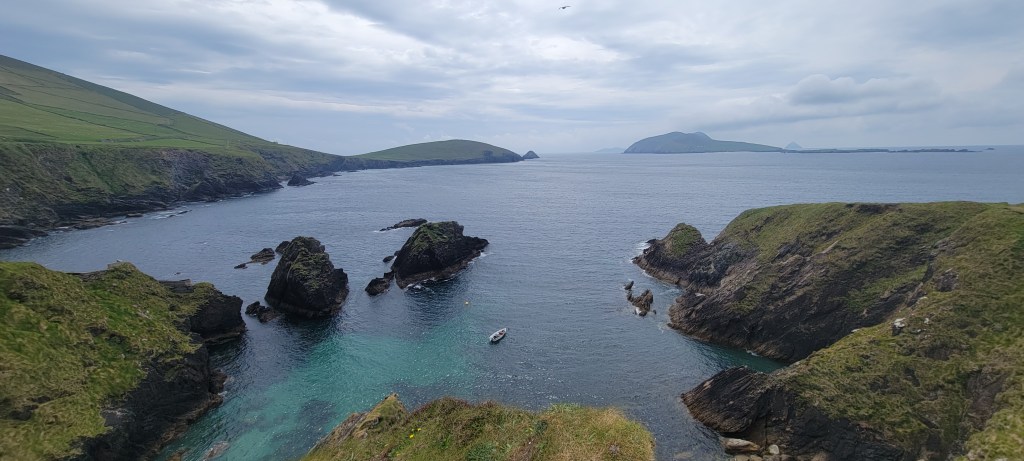
In the increasingly rare, yet still present compositions with other instruments, we get moments that take the record out of its comfort zone. Several parts of “Gaeltacht” include a contemporary drum kit with bass guitar, which ends up pairing surprisingly well with the harp in this more rock-oriented context, proving both the instrument and the album to be more versatile than previously thought. Other parts of the piece practically shove the harp to the background to make way for the string section and the bagpipes to really take center stage. Yet, still other moments make way for the Irish flute to take the lead with absolutely majestic-sounding melodies. The track “Eliz Iza” brings me back to the base of those mist-laden mountains in Connemara or Conor Pass, with its ethereal and haunting background choir vocals that make me take on the splendor of a land that seems to be more of fog and precipitation than of earth or clear skies. There’s a moment in the song where the harp is nowhere to be found; instead, the choir vocals and string section take up the entire mix and pair so well together into this stunningly gorgeous moment of awe. When the harp finally does come back, it’s really only to accentuate the squawking regalness of the bombarde, as if it’s the horn calling from some castle court far off in the distance. In the last half of the track, when every instrument comes in, including the bass and drums, we get a moment of overwhelming beauty that feels like I’m staring upon untamed lands from many eons ago.
This album made me realize that having pride in your heritage doesn’t have to come from a place of hatred of other peoples. I was so used to racist nationalists co-opting their love of an identity for an outlet for their bigotry that it turned me off from being interested in the past of my ancestors. However, it was this record and my trip to Ireland that made me realize that it doesn’t have to be this way. I can have an affinity for where my predecessors came from without having to view others as lesser. To say I loved this album, would be putting it lightly, what it did for me is something that few other things can. I hear them calling to me; it’s a powerful thing. I hope that one day we can review a record that keeps you in touch with your past people; until then, I will keep listening to obscure records in hopes of finding music that will speak to others as much as this spoke to me.
If you would like to listen to Renaissance de la harpe celtique you can stream it on Spotify, Apple Music, YouTube Music and Amazon Music. The only way I’m aware of to own a physical copy of the music is to purchase them second hand online. Stivell does not have a Bandcamp page nor does he currently sell his music on his website.



 ARDENTLY
Leave a comment