

Believe it or not, but these past few months have been shockingly dry for Seattle. November, December, and January are the months with the highest average of precipitation for The Emerald City, and yet for almost three weeks straight we have had no rain! Believe it or not, I was a little disappointed – I was anticipating the worst bout of seasonal depression I’ve ever had and instead I went on several nice walks – this is not what I moved here for! So imagine my relief when we’re finally treated to some of that gloomy rain I so dearly crave, and now that it’s raining again I get to review one of my favorite new albums to listen to when the weather is particularly nasty. Today I have the pleasure of reviewing: Last Night I Heard The Dog Star Bark by Gwenifer Raymond, my favorite release of 2025.
Raymond’s music falls squarely under the genre known as “American Primitivism”, which is a pretty distinct style of Contemporary Folk music developed in the 1950s by John Fahey. It borrows the finger-style picking used by a lot of blues and early country musicians of the time and melds it together with unconventional melodies and structure.

I find this record so uniquely captivating. Raymond so effortlessly constructs these expansive and highly intricate pieces with hardly ever more than just one acoustic guitar. Despite this limitation, these pieces are always submerged into an atmosphere that the record consistently maintains. The album’s first two tracks, “Banjo Players From Aleph One” and “Jack Parsons Blues” illustrate this perfectly.
The first song captures the mood so eloquently, as it fades in with this extremely eerie droning and these shimmering and quickly-played banjo pickings. Not long after, we get these claw hammer banjo chords that fit in perfectly with the ominous sound of the track. Eventually, everything but droning subsides and we get this absolutely gorgeous, yet brief, interpolation of “You’ll Never Leave Harlan Alive” on the acoustic guitar. The little splashes of reverb on both the banjo and acoustic guitar go a long way in projecting this ringing tone that really pushes the ambience of the track over the edge. I just adore how haunting this introductory track is, and while it might not be entirely indicative of the instrumental palette of the rest of the record, I can think of no better song to serve as a tone setter.
By contrast, the second track, “Jack Parsons Blues”, is much more dense in its brilliant-yet-lofty cascading layers of acoustic guitar. Beginning with this bassy riff, it isn’t long until the song starts to incorporate another guitar line that gradually becomes more elaborate. As the guitar lines get more involved, Raymond’s playing also becomes more intense, and we can faintly hear the guitar strings buzz as the instrumental gets progressively louder and more intense. The guitar pulls back to nothing more than the riff that opened the song – for now the extremity is gone, but the song wastes no time in building it back up. The track lunges into this aggressive playing as Raymond is practically slamming into these strings, the buzzing is so much more palpable in the track’s most ferocious passage. Regardless of their differences in instrumentals, both songs are steeped in an formidable atmosphere of dread.
The next track, “Champion Ivy”, is just about as involved as the previous song, but is comparatively much calmer. The piece eschews the bombastic and daunting sound previously established for something much more melancholic, yet it’s just as upbeat. The strumming is what really keeps the lively energy going – it has a very rhythmic and almost pulsating quality to it, sounding more akin to a tambourine. As the song progresses, it does eventually start to bring back a bit of that tense feeling that was palpable in “Jack Parsons Blues”, but that moment quickly dissipates before it can completely envelope the track.
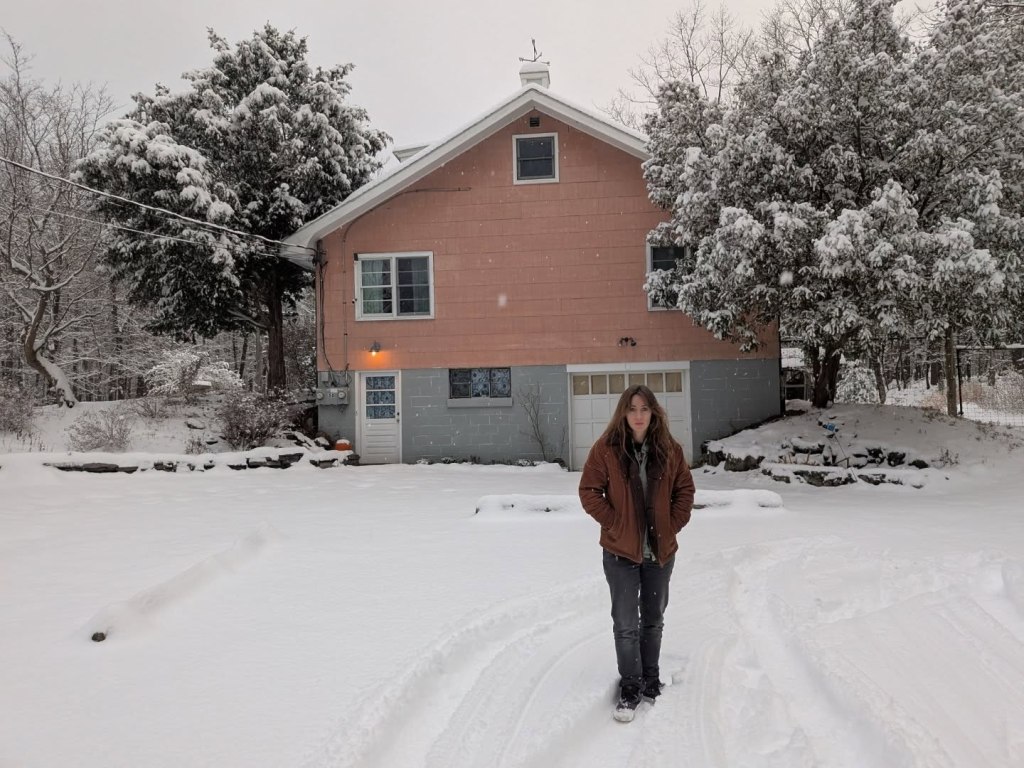
Following “Champion Ivy” is “Bliws Afon Tâf”, which still manages to keep the somber demeanor of the previous track and even expands upon it. The whole song feels like a depressive bout of cabin fever as you longingly stare out of the window watching the rain gently hit the ground. What’s more interesting to me is just how reminiscent this song feels to classic American Primitivism – it really reminds me of several songs off of Volume 6: Days Have Gone By by John Fahey or even some acoustic blues, and the melody feels like something Elizabeth Cotten would’ve written back in the 50s. It just has that bittersweet sort of autumnal mood to it that I just can’t get enough of.
The album really picks up some more steam again on its fifth track, “Bonfire of the Billionaires”. It starts relatively sorrowful and lethargic, but soon it bursts into this ferocious fireball of boisterous fast playing. The song becomes rife with bluesy flourishes and a deep rumbling from the lower notes as Raymond blazes through the song. The main riff is easily the most urgent and intense so far, and all the musical motifs and improvisations in between each iteration just brilliantly keep up the energy.
“Dreams Of Rhiannon’s Birds” functions more as an interlude than anything else. It’s a lot less dense in guitar lines and it’s nowhere near as fast as the last four tracks. Instead, each note feels like it has so much more room to breathe, between musical phrases there’s rests allowing the notes to delicately ring and fade out. I also love the slide guitar that comes into the song not long after. It’s such a gorgeous piece; it’s a shame that it doesn’t last much longer than the brief “Banjo Players From Aleph One”.
Like many of the songs before it, the title track starts off relatively bare with but a few acoustic layers and the bass line taking center stage. Soon, it expands and iterates on itself until it becomes more and more intense and complex. Gradually, the soft, twinkling finger picking turns into an impassioned backdrop for a beautifully frenzied solo. The touches of slide guitar add a ramshackled quality to the tense feel of the track. Before long, the entire instrumental to slow down and to allow that guitar some much-needed respite, even if for only a moment. I find it fitting that this song is the title track – to me this is when the particular sound of Last Night I heard The Dog Star Bark becomes apparent. It’s a masterful synthesis of American Primitivist playing and song structure, a strong bluesy melodic influence, small hints of dissonance, and momentous post-rock builds that create the album’s gothic and apocalyptic sonic palette.
“Cattywomp” is one of the more distinct songs in the track list. At first, it sounds almost like a ragtime tune written for guitar, kind of like if Scott Joplin exclusively listened to Our Endless Numbered Days by Iron and Wine. Eventually, the song reveals more of the record’s ubiquitous sound, as it goes on it becomes more heavy and fierce, with much more prominent bass notes and louder – and occasionally discordant – playing, you’re soon reminded of what album you’re listening to.
“Bleak Night In Rabbit’s Woods” is the second-to-last song on the album and serves as its climax. It starts off just as mournful and slow as so many tracks before it, as if Raymond’s guitar was actually grieving the loss of someone. The low notes keep time and do not deviate much in the beginning, producing a pulsating sound that feels almost hypnotic. As the song progresses, the playing incrementally gets faster until a certain moment where it launches into this speedy jam with these layered guitar lines, which should be very familiar by now. The song has this intense, repeating motif, akin to a chorus, with this thunderous-yet-rhythmic strumming. The passages in between the repeating motifs showcase some of Raymond’s finest playing. The notes wander around, creating winding musical phrases before they get yanked back to place with the short leash they’re being kept with. Each passage feels like it has at least one distinct, beautifully improvised section. It’s not long until this breaks down and we get some of the most vicious and cacophonous strumming I’ve ever heard an acoustic guitar produce. In a way, it reminds me of classic black metal, something similar to what you might hear in a Bathory– or A Blaze In The Northern Sky-era Darkthrone album.
The final song, “One Day You’ll Lie Here but Everything Will Have Changed” feels so much less like the decisive pinnacle the last song was – it’s more like a bittersweet goodbye to a loved one you’re never going to see again. It’s pretty and relatively calm, forgoing the exhilarating compositions with multiple labyrinthine acoustic lines for a more relaxed-feeling instrumental reinforced by the pedal steel guitar in the background, gently weeping into the void. Eventually, even this track gets slowly submerged into an all-encompassing quagmire of noise as well. The gentle folk of the track slowly sinks to a pit of groaning distortion.

I have a lot of reverence for this album. It has a unique sound backed up some truly awe-inspiring playing, with fantastic and memorable songwriting to boot. Many records struggle to get just one of those aspects done well, but Last Night I Heard The Dog Star Bark does all them effortlessly. It’s not enough that few records sound much like it, but the atmosphere it creates is completely enthralling with how gloomy and fearful it is. It feels like I’ve been transported into another world, one that’s simultaneously a lot scarier and depressing than ours, but also has the capacity to be just as beautiful and uplifting as ours. This is truly a one of a kind record.
If you would like to support Gwenifer Raymond, you can stream Last Night I Heard The Dog Star Bark on YouTube Music, Spotify, Apple Music, Tidal, Qobuz and Deezer. You can also purchase the album on Bandcamp. You can follow Gwenifer Raymond on Instagram, Facebook and Bluesky.

 ARDENTLY
Leave a comment