
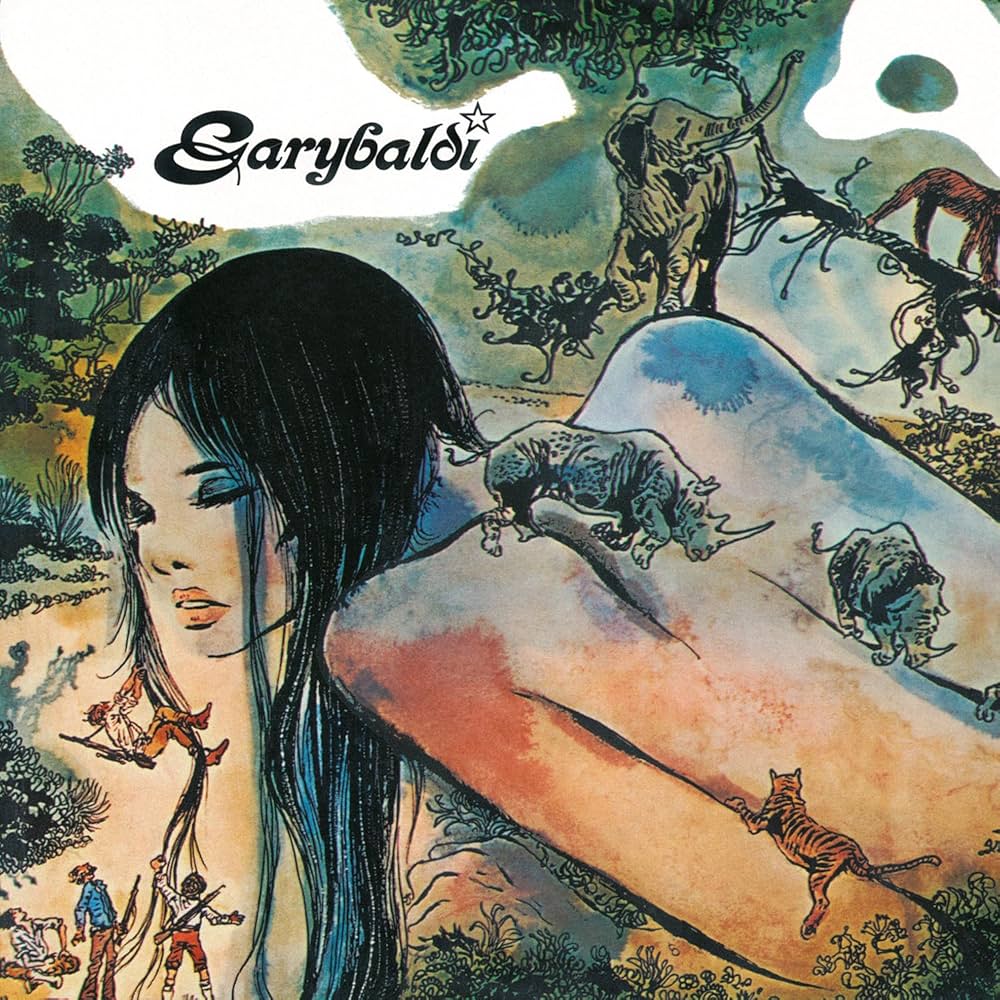
When I was in middle and much of early high school, my favorite band was Pink Floyd. I remember walking into school with a Dark Side of The Moon tee shirt and several whole albums downloaded onto my school laptop very legally, instead of actually doing any school work – I’m sure my mom is gonna love to read this sentence. But never in my youth did I ask myself this very important question: what if the more thrilling moments from Pink Floyd’s Meddle and a Jimi Hendrix album came together and had a baby that spoke Italian? If I did, then maybe I would’ve been more familiar with today’s feature: Nuda by Genovese band Garybaldi.
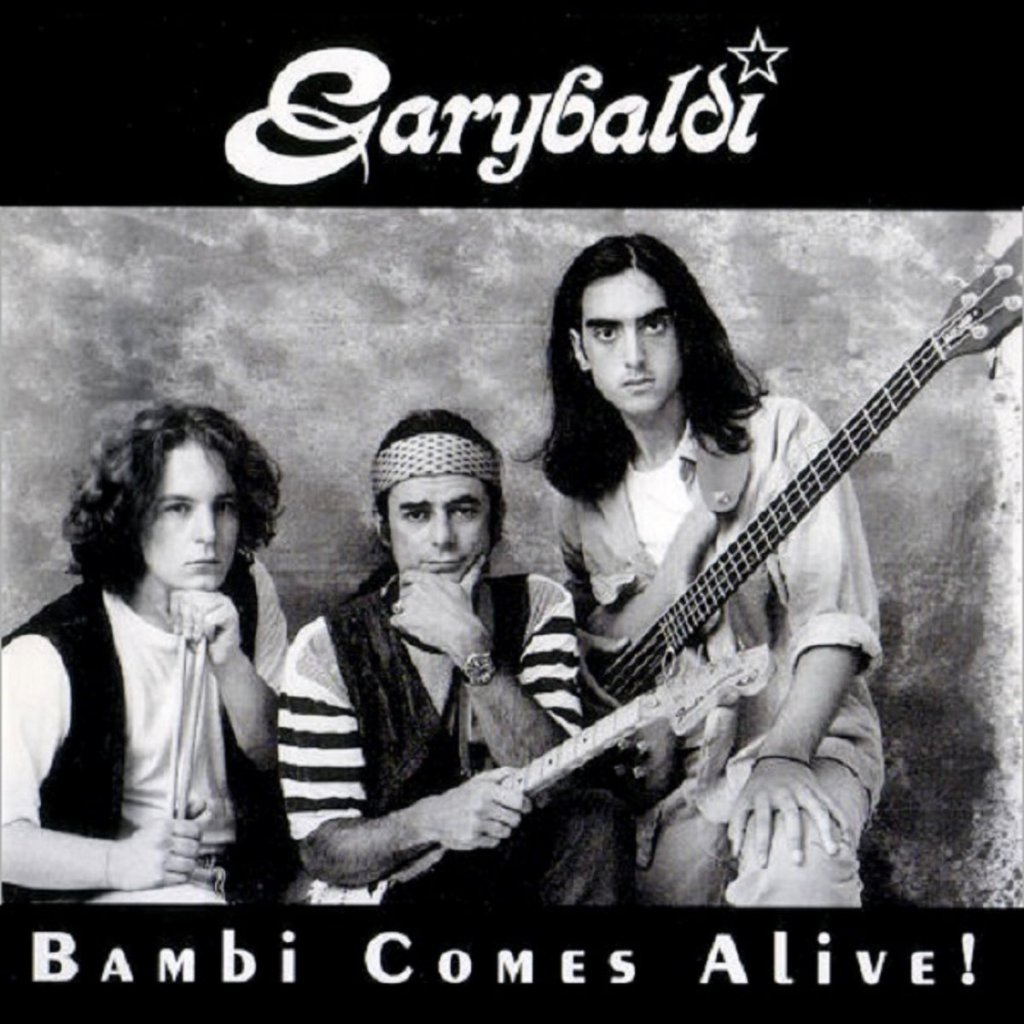
There’s something interesting with how Garybaldi writes their winding, often hard-to-follow songs. They don’t always offer a “verse-chorus-verse” structure that’s so popular in much of contemporary, “western” music; instead, musical phrases weave in and out of the song and only come back whenever you least expect it. I think the best example of this is on the opening track, “Maya Desnuda”. There’s about three reoccurring riffs with the occasional, shouted phrases from the band’s lead singer, P.N. “Bambi” Fossati, that take the place of a chorus. In between the riffs are five separate solos sprinkled throughout the six-minute song, three of which are guitar solos and the rest are organ solos. On first listen, the song is a total mess that just feels like it meanders all over the place without any sense. Further listens, however, reveal that there’s an arcane method to the chaos that Garybaldi works within. Its odd lack of structure starts to seem like thread sewn together to make a greater whole. Individually, one bluesy, fried-with-distortion guitar solo is nothing by itself, but, when it’s wrapped up in the rest of the song, it becomes part of an expansive and lively listen that feels so oddly unique to much of their points of inspiration.
The previous track leads directly into the next song, “Decomposizione, preludio e pace”, which starts to easily become a pattern for the record. By stark contrast to the intriguing, yet surprisingly competent structure of the last song, this track is what I can only describe as a noise piece, not too dissimilar to that found half-way through “Echoes” by Pink Floyd. Low, distorted vibrations rumble throughout the track, eventually we’re subject to guitar wailing, gradually becoming more prominent as the song progresses. Near the end of the nearly two-minute long piece, the song transitions into this very mellow, clean guitar line which becomes the backbone of the next song.
“26 febbraio 1700” directly follows “Decomposizione, preludio e pace”, as we hear the line develop into one much more somber and melancholic, with the occasional, sharp, metallic ping from a glockenspiel to accentuate the clean guitar tone. It’s not long after that we get an additional, over-driven guitar riff that sounds like it would be right at home on a classic, yacht rock song like “Baby Come Back” by Player. The solo on this song also feels very reminiscent of yacht rock with its slightly bluesy, but ultimately laid-back demeanor; if it wasn’t seven minutes in length I would say Garybaldi was holding back on us. In the latter half of the song, we get this synth soaked in reverb playing these sustained notes that just follow the chord progression – it isn’t much, but it’s a nice addition that shows that even in their most restrained moments, Garybaldi still tries their best to keep their longer songs interesting.
The same attitude can be found on the next song, “L’ultima graziosa”. This is probably my least favorite on the whole record. The song has this super obnoxious riff that feels like it’s trying its best to emulate popular, uniquely American styles of the time, like southern or country rock. However, the song does have a decently fun harmonica solo, so an attempt was made to make the song stick out from the rest. But, it’s also this solo that makes me start to second guess if the odd compositional structure is really a deliberate choice or the band just throwing stuff at a wall to see what sticks. The harmonica is a neat little gimmick, but it comes in out of nowhere and doesn’t deviate too much from main riff – almost anywhere else on the album when a shift happened, there was either an instrumental build up or it wasn’t jarring as it was on this track.
The entirety of the album’s side B is taken up by a three-part song, “Moretto da Brescia”. The first part, “Geoffredo”, is probably the best track off the record. I love the mysterious and slightly ominous riff – paired with the organs, it makes for a haunting sound. I also enjoy the part with the harmonized vocals atop a bed of acoustic strumming and pianos. The reverb-heavy guitar solo and the pounding timpani are also fantastic. Not long after, there’s a great organ solo with these weepy strings in the background, adding a certain tragic flair to the song.
“Geoffredo” flows perfectly into the next part, “Il giardino del re”, with this aquatic and wilting slide guitar. However, it’s not long before the song really builds up and introduces this absolutely killer main organ riff that sounds like it could easily be adapted into a metal record. It doesn’t hurt that it’s paired with probably the best guitar and organ solos on the whole album, which makes for stiff competition for this record. And much like “Decomposizione, preludio e pace”, we’re treated to another instance of the band playing with atonal elements to create a hostile and noisy atmosphere. These siren-like guitars float by, supported by this really odd plodding groove from the bass and drums. We get a get another organ and later an oscillating synth solo on top the same groove, until the very end of this part.
The third and final part, “Dolce come sei tu”, is probably the most mellow and also least consequential track on the whole album. It makes for a very anti-climatic ending. Knowing this band, I was expecting some crazy, fuzzed out guitars or a wild and lively organ solo, but it instead it feels akin to a laid-back sunbathing section on some beach that would be far too expensive for me to travel to. Bouncy bass, clean guitar tone, cowbell and a slow tempo, it’s certainly not the worst thing I’ve heard, but it feels so nondescript compared to literally anything else on this album.
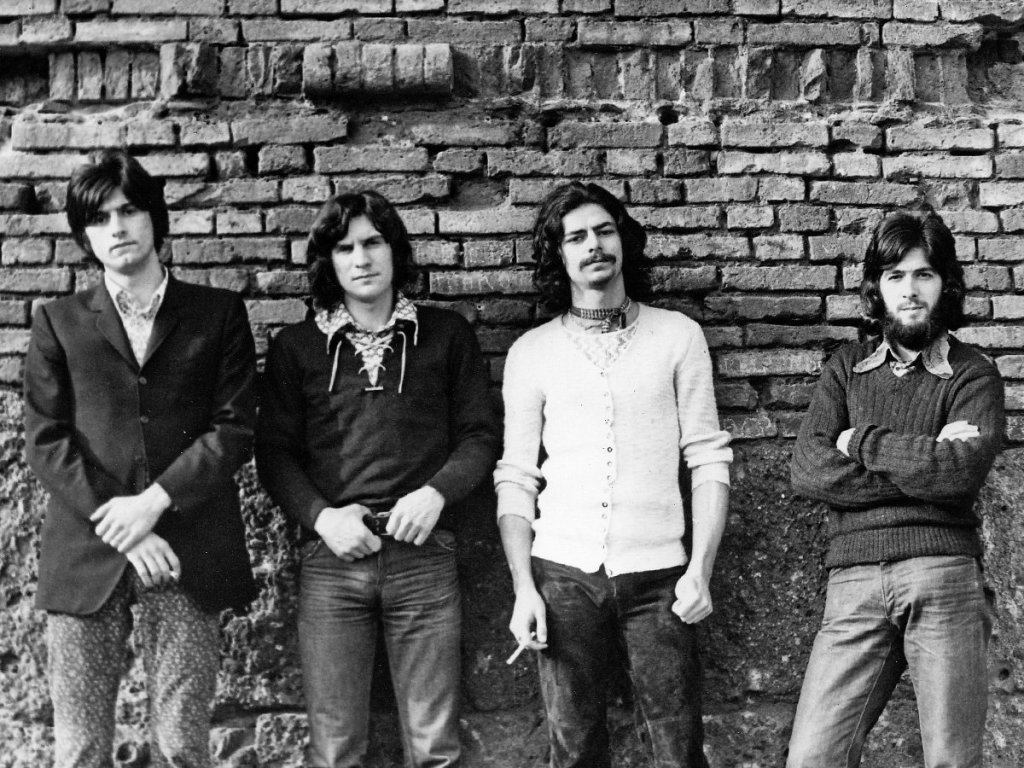
Nuda is sort of a perplexing album to me. I love the band’s unique take on composition and structure – that alone helps to give the record a unique identity of its own among the sea of progressive and psychedelic rock of its era. However, it never feels like Garybaldi fully capitalized on their potential; much of their sound is so raucous and wild and yet they don’t seem willing to explore the possibilities of it, instead shifting directions, which can be an exciting detour into previously uncharted territory or can just as easily serve to mystify or confuse the listener. Great moments that feel like they could be extended upon or played around with seem to only dissipate into something else without much fanfare because the record is too excited to show you all its tricks as quickly as possible. This isn’t to say that you shouldn’t listen to the record; I still think Nuda is a very colorful and vibrant album with a lot to offer the listener, but there’s a certain lack of focus that stops the album from being a early 70’s prog rock classic and instead leaves it as just “good”.
If you would like to support Garybaldi and listen to Nuda, you can stream the album on YouTube Music, Apple Music and Spotify. The album is not available on on their bandcamp page.
 ARDENTLY
Leave a comment