

Fun fact about me: I tried to learn Hungarian on Duolingo during the pandemic. I’m not entirely sure as to why I thought I could or should do such a thing, but I have always been interested in the unique ethnic and linguistic oddity of Hungarian and many other Finno-Ugric languages. As much as my staff bio talks me up to be some modern day sociologist and anthropologist, linguistics are not my strong suit – so perhaps it shouldn’t be a surprise to me that the language did not stick like I hoped it would.
My lack of language-learning skills puts me in an odd position when it comes to reviewing foreign music. I guess that’s one way of breaking language barriers – just say “to hell with it” and talk about whatever your little heart desires, even if you have no idea what’s being said. I hope my two weeks of Duolingo Hungarian that I took more than 4 years ago won’t fail me now, because I have to talk about Nem arról hajnallik, amerről hajnallott… by Budapest traditional folk band Muzsikás.
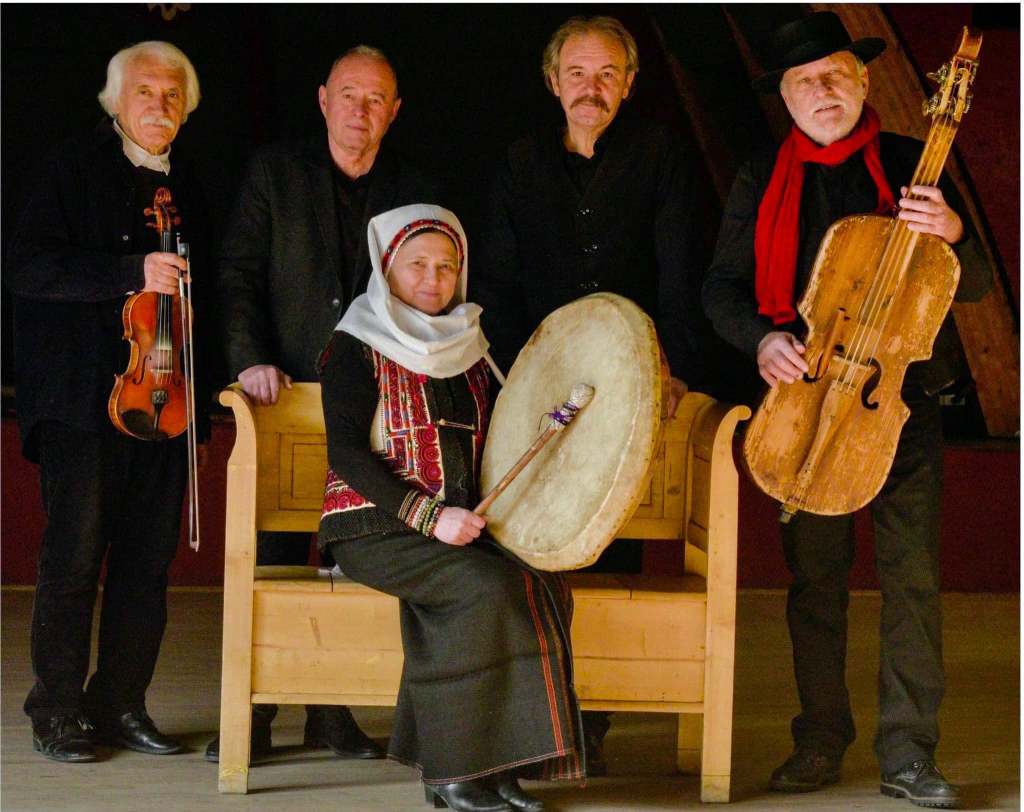
I can’t say I’m an expert in the field of Eastern European folk music – that’d really be a better question for the other ARDENTLY gal. Or it would be, at least, if the Hungarians were Slavic in origin, which they’re not. I alluded to this fact about 177 words ago. Unlike many of their neighbors, Hungarians are neither Slavic nor Germanic. Like the Finns and Estonians, they are one of a few contemporary ethnic groups who settled in Europe from Nomadic Siberian peoples, around the Ural Mountains.
The use of traditional Magyar folk instruments throughout the whole album is a great sonic indicator of the significantly smaller ethno-linguistic group that Hungarians belong to. Instruments like the cobza, citera, ütőgardon, tilinkó (otherwise known as an “overtone flute”), and the duda bagpipes are all played almost exclusively by ethnic Hungarians and adjacent peoples, whether that be in or outside of the country of Hungary. Along with their unique folk instruments, the band also makes use of violins, cellos, bass guitar, bouzoukis and violas.
The robust lineup of instruments played on this record make for a truly antique medieval sound. You would think the veritable menagerie on offer would make for an overly complicated mess of a listening experience, but that’s not the case! It can’t be understated just how well the band manages to balances all of the sounds at their disposal without overwhelming the listener. Despite the inclusion of numerous instruments, the album is very tasteful, yet comes across as spare at times.

I would be lying if I said there wasn’t a more-or-less consistent sound across the record, informed by the plethora of string instruments. Both the cobza and the bouzouki end up being the backbone for many songs across the record. The cobza is a lute endemic to their region and the bouzouki is also technically a lute, but sonically has more in common with a mandolin. Another important instrument to be acquainted with is the citera – its appearance, playing technique and sound are not too dissimilar to that of a mountain dulcimer, but the tuning is wildly different. The rest of the ensemble will be addressed whenever it becomes relevant.
The first track “Rabnóta (Nem arról hajnallik)” acts a great tone setter for much of what the album has to offer. The citera starts off the track with its plucky metallic sound, but it doesn’t take long before the song really builds up with the cobza, bass guitar, and the reedy, high-pitched playing of the tilinkó woodwind. I love how the song progressively builds up – if the bass comes across as out-of-place to those of you reading, I’d argue that it is an absolutely crucial addition to not only this song, but also many of the tracks on the album. The bass adds a backbone and rhythm to the track that is otherwise only accentuated by the slamming hand percussion.
The second track “Eddig vendég” offers some great variety to the track list, while still offering a sense of instrumental progression. The song starts off with a violin and bagpipe duet that is quickly followed up by hand drums. Soon after you hear the ütőgardon, which is an instrument that is similar to an upright double bass, but instead of being played by a bow, it’s played by smacking the strings with wooden stick – giving it a bouncy, percussive, and almost tribal-sounding quality. Not long after that, we get the buzzing, oboe-like tone of the shawm harmonizing with the violin. It was “Eddig vendég” that made me realize that despite the relative cultural isolation from their neighbors, the Hungarians still aren’t without their outside influences. In some way, I see a commonality with European medieval liturgical music that would not be present if it were truly isolated.
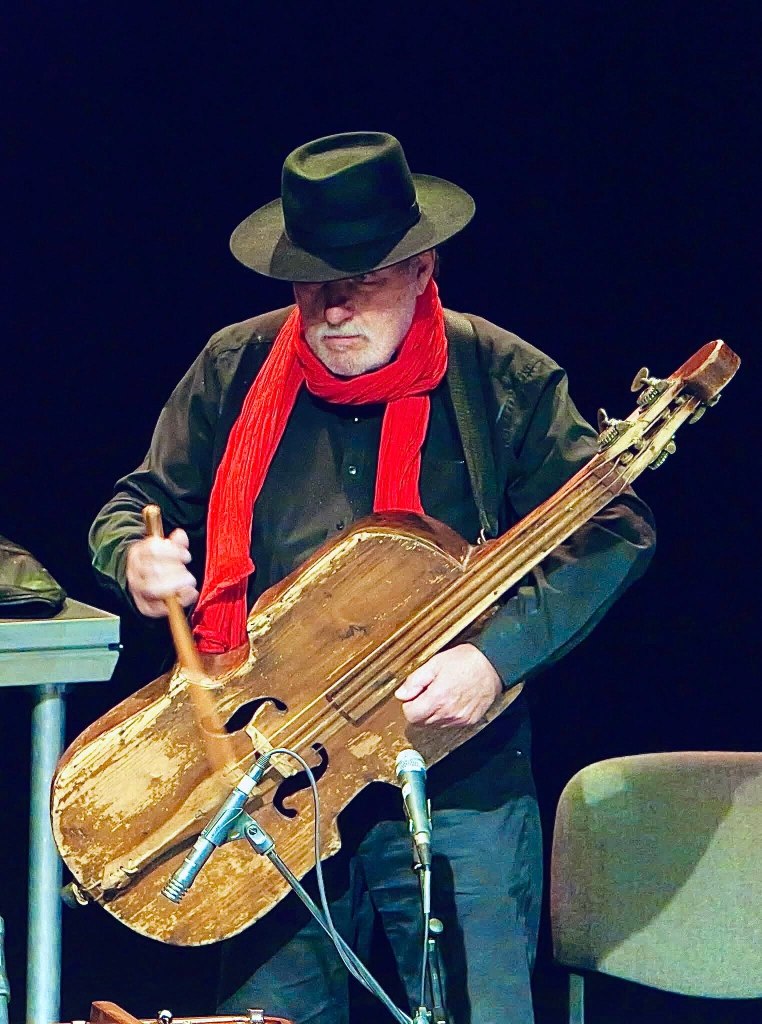
The bagpipe and shawm together create an intoxicating drone that is akin to the type of music made for worship in the High Medieval period. The compositions of Hildegard von Bingen are a prime example of drone being in medieval non-secular music. This isn’t to say that Muzsikás take super heavy from her music or any other medieval composer, as they lack many other aspects that make up this kind of music, including choral vocals and polyphony. I believe that this propensity for drone is partially influenced by medieval liturgical music, whether consciously or just through cultural osmosis.
“Eddig vendég” wouldn’t be the only song on the record to include drone. The fifth track, “Bújdosódal (Fordulj kedves lovam)”, utilizes drone in a way that reminds me the hurdy-gurdy – specifically the way in which adept players use a stop-start technique to add some rhythm to their playing. That type of playing usually accompanies the drone string of the instrument. For the longest time, I was convinced it was a hurdy-gurdy, but after some digging, I couldn’t find anything online about anyone playing hurdy-gurdy on this record. I even asked my magic eight-ball just to be sure, and it replied back with “very doubtful”. After further investigation, I have come to believe it is actually a cello making the drone.
The use of drone also makes for sporadic appearance on “Regen Volt, Solka lesz”. The duda bagpipes not only play an important role in establishing the melody of the song that the lead singer, Márta Sebestyén, harmonizes with, but also in adding another layer of notes in a sustained, lower register, which is more often found in Medieval Christian liturgical music. Following “Regen Volt, Solka lesz”, the eighth song “Szerelem, Szerelem” is notable for being a solo vocal performance from Márta Sebestyén. I haven’t talked much about her singing, but she proves to be quite the vocalist! Her voice is very bright, a little sultry, and makes excellent use of vibrato that hits tones that we just aren’t accustomed to hearing in music made for a “western” audience. This true for every track she sings on, not just her solo performance.
Hungarians and their traditional folk music serve as a powerful reminder that our preconceptions on other peoples may not be as accurate as we once thought they were. Some tend to think of geographical regions as having the same ethno-linguistic group within the entirety of that area, but it just isn’t true. Eastern Europe isn’t entirely Slavic, just like how not everyone in East Asia is Han Chinese. It’s an easy way to other groups of people they might have little consideration for – they blend them into one homogeneous group – history and linguistic differences be damned. The next time you or someone you know makes a generalization about a group of people, step back and think to yourself, “am I forgetting someone?”. Think back to this review and wonder if Muzsikás, who tried their hardest to represent their culture and traditional expression of their culture, would take so kindly if they were put into a group that they feel didn’t accurately represent them.
If you would like to support Muzsikás, you can stream Nem arról hajnallik, amerről hajnallott… on Spotify, Apple Music and YouTube Music. You can also purchase the album on discogs.com.

 ARDENTLY
Leave a comment