
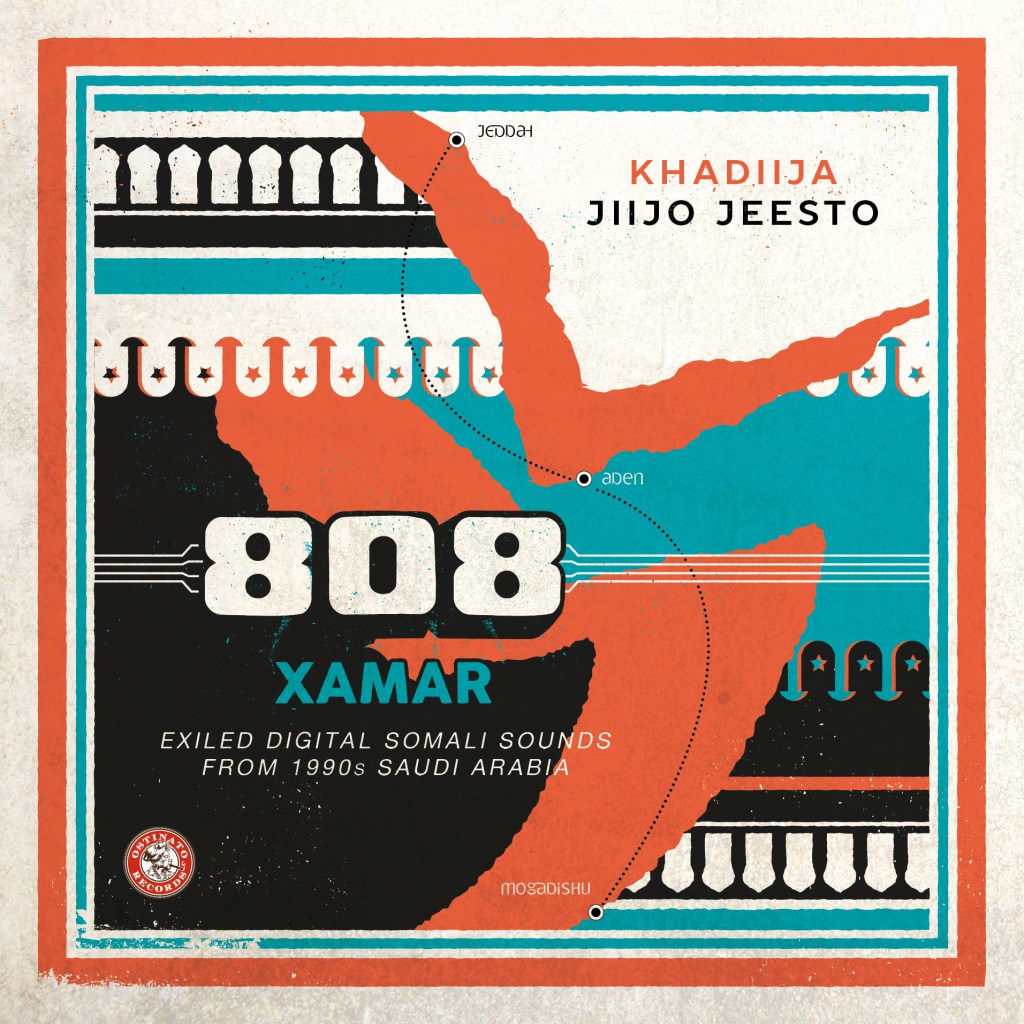
In my journey to experience the world through music, I’ve listened to a plethora of music from Africa. In my listening, I’ve enjoyed many a traditional folk genre and a modern pop album, but never had I really seen the very beginnings of the fusion of these two in such an interesting way as I did in Khadiija Jiijo Jeesto’s Xamar: Exiled Digital Somali Sounds from 1990s Saudi Arabia.
This record was an incredibly difficult journey in creation. Jeesto was fleeing her home country of Somalia in the midst of a brutal civil war in the 1990s and was doing her best to find refuge in Saudi Arabia. Despite Saudi Arabia not offering much opportunity for her, and despite Saudi Arabia outright banning music, Jeesto managed to record this album, a collection of “hypnotic, 808-driven songs rooted in Banaadiri culture”, in 1994. Though she lacked guitars and brass due to the difficulty in smuggling them, the synths and drum machines that she turned to become a really interesting vessel in which she preserves Somali music.
I really enjoyed listening to this album, though I really do wish I knew what she was saying in the lyrics. Are they folk songs she’s singing? Are they songs of her own composition? They sound joyous and upbeat, and I imagine that under different circumstances, Jeesto would have sung these songs live to a crowd of people who’d dance along to the drum beats and synth melodies.
The song “Ana Wada is Weydiyaa (I Ask Myself Too)” was my favorite track from the album. I really enjoyed the complex beats from the drum pad, and I really like the sort of twang that the synth has while playing the supporting melody. I think that Jeesto sounded the most joyous on this track as well. The warmth in her voice saturates this track, creating a lovely contrast with the cooler electronic instrumentals. Her vocal agility is also really amazing – she flies between notes at the bottom and top of her range. She makes those difficult jumps seem incredibly easy.
Another track I really enjoyed was “Waa Kula Joogaa (I Am With You)”. I really enjoyed the beat on this track; it’s a bit more simple than “Ana Wada is Weydiyaa (I Ask Myself Too)”, but just as danceable. I really like how her vocals sound on this track – the reverb gives it a vintage sort of quality. I think it’s a really interesting contrast with the drum pad, which has almost no reverb and is far more staccato in comparison.
All other exposure I’ve had to Somali music has been in a more traditional vein, using traditional Somali instruments to capture the sounds of Somalia. I really enjoyed this unique showcase of folk music on some very non-traditional instruments. Being able to take a journey into this really unique preservation of Somali music was very eye-opening in regards to how we typically see traditional music be preserved in the modern era. I found Xamar: Exiled Digital Somali Sounds from 1990s Saudi Arabia to be really interesting case study on this, and I hope to see other artists take a similar approach in the use of electronic instruments to play more traditional styles of music.
You can find this album exclusively on Bandcamp, from Ostinato Records.
 ARDENTLY
Leave a comment