
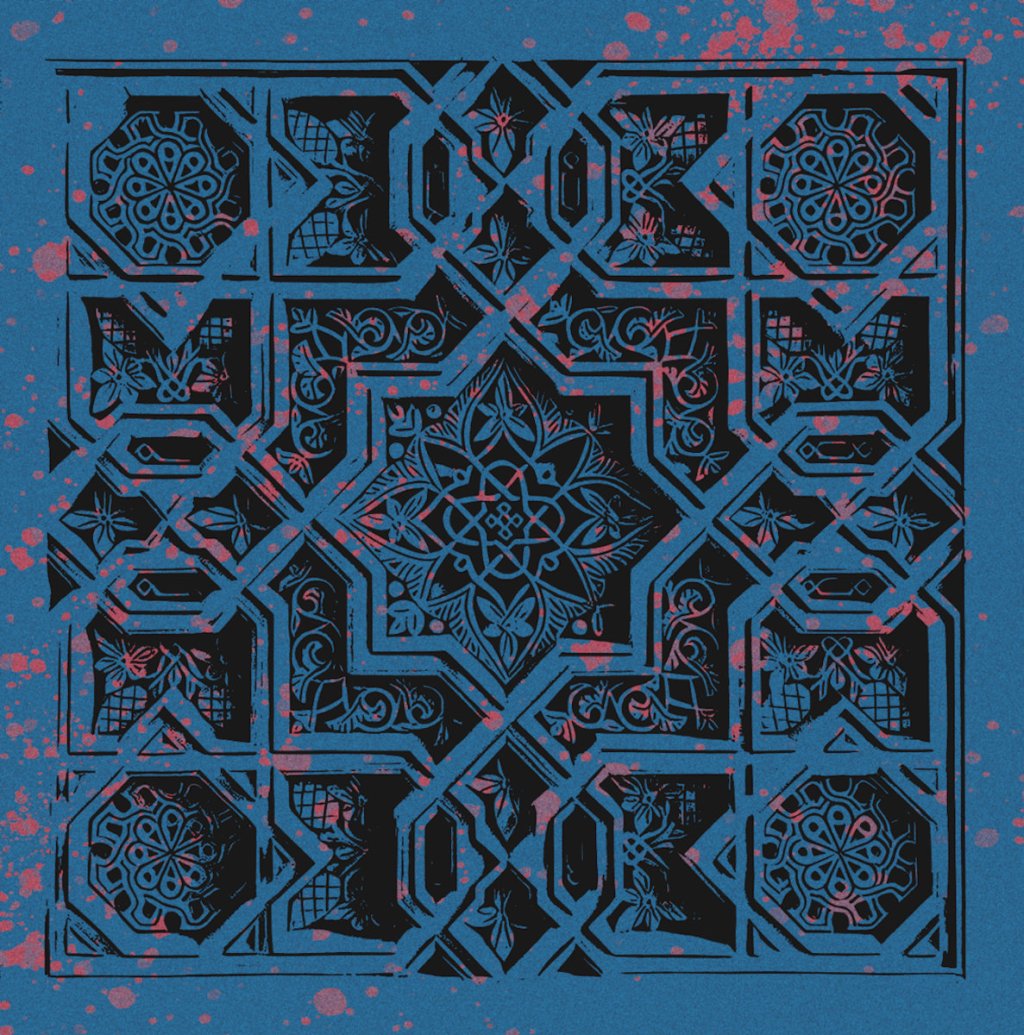
For many people, Uzbekistan is a place explored through the pages of history books and photographs. To many Americans, we know Uzbekistan as a formerly Soviet nation that’s surrounded by vast deserts and mountains. Uzbekistan’s beauty and rich history are presented to us in print media, but a large aspect of Uzbekistan is left undiscovered by many Americans: the sounds of Uzbekistan. Enter qorakitobchi – the experimental project of Anvar Kalandarov, a Tashkent-based sound artist, researcher, and sonic archaeologist.
Kalandarov, through qorakitobchi, creates “ethnoise” – a term he created that is “a sound that is both raw and deeply rooted” that combines industrial noise, ambient music, and ethnic elements. Out/In offers a way to experience Kalandarov’s Uzbekistan that goes beyond just the cliches, offering Uzbekistan “through its breath, its deserts, [and] its memory”.
Kalandarov describes Out/In as “[dense] layers of noise, drones, and field recordings are interwoven with fragments of Uzbek traditional instruments such as the tanbur, rubab, and sato”. This release is not just the traditional sounds of Kalandarov’s Uzbekistan, but also the daily noises of people, industry, and intangible culture filtered through an ambient lens.

I love releases like Out/In – I love these kinds of abstract showcases of the world we live in. I love how qorakitobchi has captured and showcased the Uzbekistan that perhaps only a local knows. Releases like these give you ample opportunity to sit with these sounds and create a picture of what creates these different tones and noises.
The first track, “Out”, felt more industrial. The track opens with perhaps wind howling, or machinery running, followed by eerie strings or a siren of sorts. Crows caw and a low, haunting melody plays, all while water rushes underneath and a woman cries. What is so interesting is that it could be all of that or none of that. This song allowed me to picture large, industrious factories, foggy public parks, and wandering through a large city on a rainy day. The track ends with the joyous din of children laughing and playing, creating a stark contrast with the somber tone from the rest of the track.
The second track, “In”, began with the sounds of a thunderstorm. It sounds like rain on windows, dripping from the rooftops, a distant crack of thunder, and cars driving by in the rain. There is a hollowness in the melody that plays in the opening, while a distorted percussion in the undertones provides a structure for the rest of the noises to build off of. This song feels like watching a storm come from far away and pass over you, all while rain torrents down. The track ends on static, creating a very interesting end point, making you want more.
It’s impossible to describe each individual sound that creates the purposeful din of this record. It’s a fantastic way to capture some of what Uzbekistan can sound like – in many ways, it sounds just like your home or mine, featuring familiar sounds of birds, rain, and cars passing noisily by. There are sounds that are distinctly Uzbek – the tanbur, the rubab, and the sato. It was a really enjoyable way to visualize the daily lives of people who live on the opposite side of the globe from myself.

You can find more from qorakitobchi on Bandcamp, SoundCloud, and Spotify. You can find more projects cultivated by Anvar Kalandarov on his record label, Maqom Soul Records, on Instagram and Bandcamp.


 ARDENTLY
Leave a comment